Testing Services
Peptide Testing
.
STERILITY:
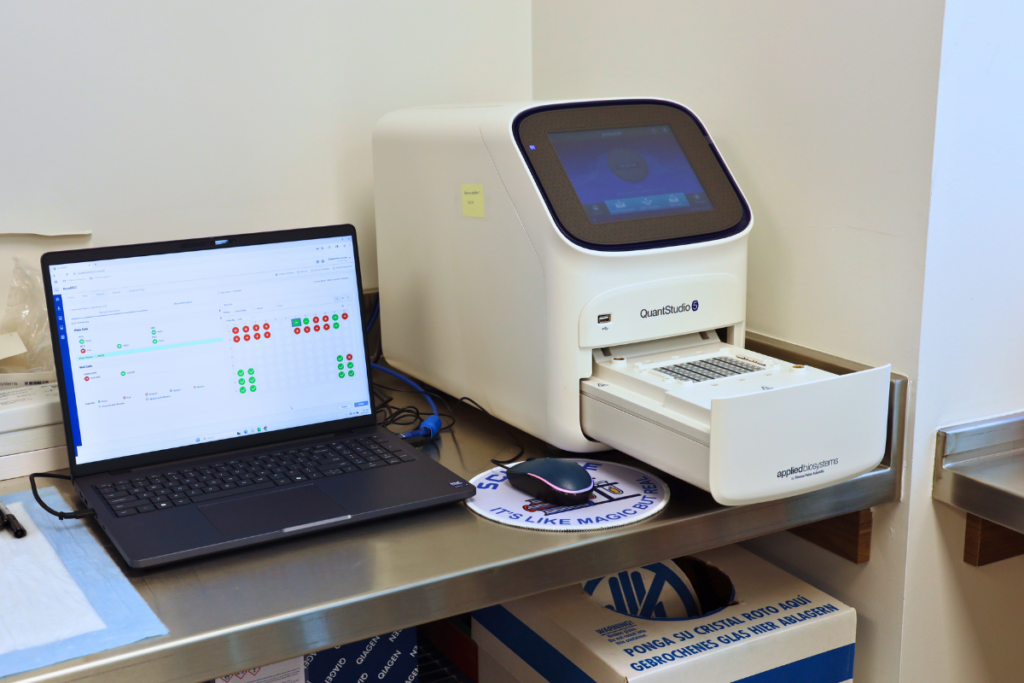
Sterility testing for compounded pharmaceuticals using the Thermo Fisher SteriSEQ kit utilizes a multiplex qPCR assay to simultaneously detect thousands of bacterial and fungal species. This advanced system delivers highly sensitive, actionable results in less than five hours, allowing facilities to bypass the multi-day incubation constraints of traditional culture methods.
ENDOTOXIN:
Quantitative bacterial endotoxin testing uses the PYROSTAR™ kinetic turbidimetric LAL system with FDA-licensed ES-F reagents to detect Gram-negative endotoxins in medical and pharmaceutical samples following USP standards.
POTENCY:
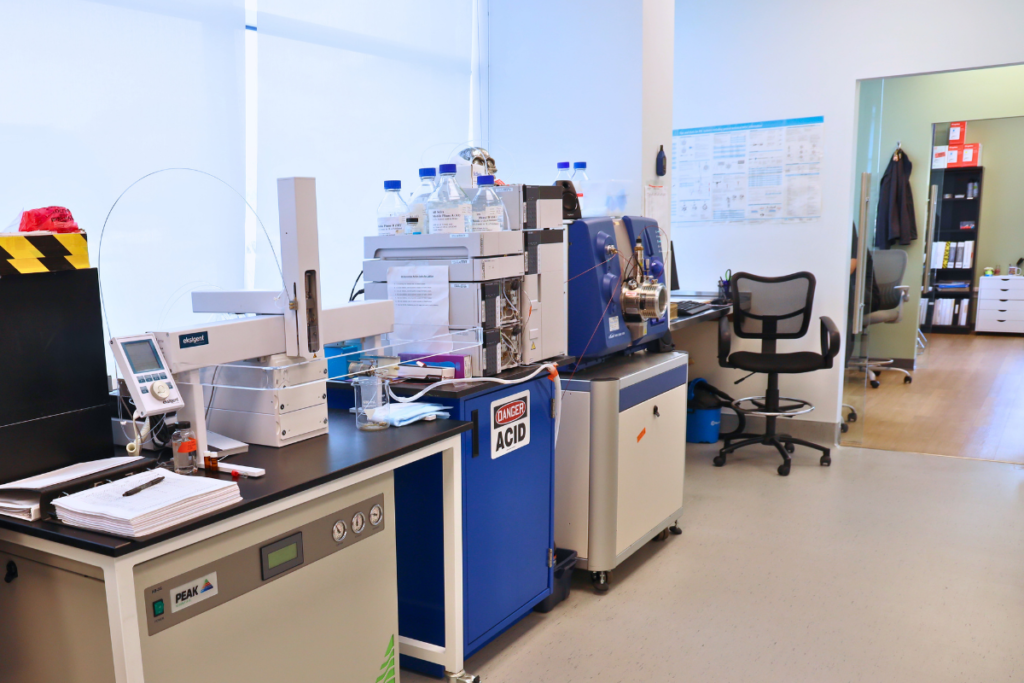
Our GMP-compliant, ISO/IEC 17025 accredited LC-MS/MS Peptide Potency Test delivers the rigorous validation data and absolute quantification required for FDA and international regulatory filings. Validated under ICH Q2(R2) guidelines, this highly specific method differentiates target peptides from complex impurities to provide an audit-ready data package and Certificate of Analysis (CoA) that seamlessly supports your submissions.
USP <71> Aligned qPCR Sterility
Rapid molecular sterility testing performed as a supplemental or alternative microbiological method aligned with the USP <71> Sterility Tests requirements for detection of viable microbial contamination in sterile products. Testing utilizes validated quantitative Polymerase Chain Reaction (qPCR) methodology for detection of bacterial and fungal nucleic acid targets, including appropriate positive, negative, inhibition, and environmental controls where applicable.
Method suitability, detection limits, specificity, sensitivity, and equivalency to compendial sterility methods are established through validation studies in accordance with applicable regulatory expectations and internal quality procedures. Testing may be used for in-process monitoring, rapid release support, investigational testing, or adjunct sterility assessment as permitted by product-specific regulatory strategy.
Samples are processed under controlled laboratory conditions with documented chain of custody, aseptic handling procedures, and data review. Final reports include sample identification, test method, acceptance criteria, control performance, and qualitative and/or quantitative results interpretation.
Endotoxin Testing by PYROSTAR™ Instrument System (LAL Method)
Quantitative bacterial endotoxin testing is performed using the PYROSTAR™ endotoxin detection system with kinetic turbidimetric Limulus Amebocyte Lysate (LAL) methodology. The assay is designed for the detection and quantification of Gram-negative bacterial endotoxins in pharmaceutical, biologic, and medical device samples. Testing is conducted using FDA-licensed PYROSTAR™ ES-F reagents and microplate reader systems in accordance with applicable USP <85> requirements and validated laboratory procedures.
The PYROSTAR™ ES-F assay utilizes endotoxin-specific LAL reagents formulated with carboxymethylated curdlan to minimize interference from β-glucans and improve assay specificity. Endotoxin concentrations are determined by measuring the increase in sample turbidity over time and comparing results to a validated standard curve generated from Control Standard Endotoxin (CSE). The method supports quantitative detection across validated sensitivity ranges appropriate for product specifications and regulatory requirements.
Testing includes all required system suitability controls, standard curve verification, positive product controls, and negative controls to demonstrate assay validity, recovery, and absence of product interference. Results are reported in Endotoxin Units per milliliter (EU/mL) or EU/device, as applicable.
Method suitability, detection limits, specificity, sensitivity, and equivalency to compendial sterility methods are established through validation studies in accordance with applicable regulatory expectations and internal quality procedures. Testing may be used for in-process monitoring, rapid release support, investigational testing, or adjunct sterility assessment as permitted by product-specific regulatory strategy.
Samples are processed under controlled laboratory conditions with documented chain of custody, aseptic handling procedures, and data review. Final reports include sample identification, test method, acceptance criteria, control performance, and qualitative and/or quantitative results interpretation.

GMP-compliant, ISO/IEC 17025 accredited LC-MS/MS Peptide Potency Test
Our GMP-compliant, ISO/IEC 17025 accredited LC-MS/MS Peptide Potency Test is specifically engineered for regulatory filings, delivering the rigorous validation data required to meet FDA and international standards. This high-resolution method couples efficient chromatographic separation with highly selective tandem mass spectrometry to provide absolute quantification of your active peptide ingredients. The system easily differentiates your target peptide from closely related impurities, truncated fragments, and degradation products, ensuring unparalleled specificity even within complex matrices. Fully validated according to ICH Q2(R2) guidelines for accuracy, precision, and linearity, this service operates under strict ISO 17025 quality management controls—ensuring complete equipment calibration, analyst competency, and data traceability—to provide a comprehensive, audit-ready data package and Certificate of Analysis (CoA) that seamlessly supports your IND, NDA, and global regulatory submissions.